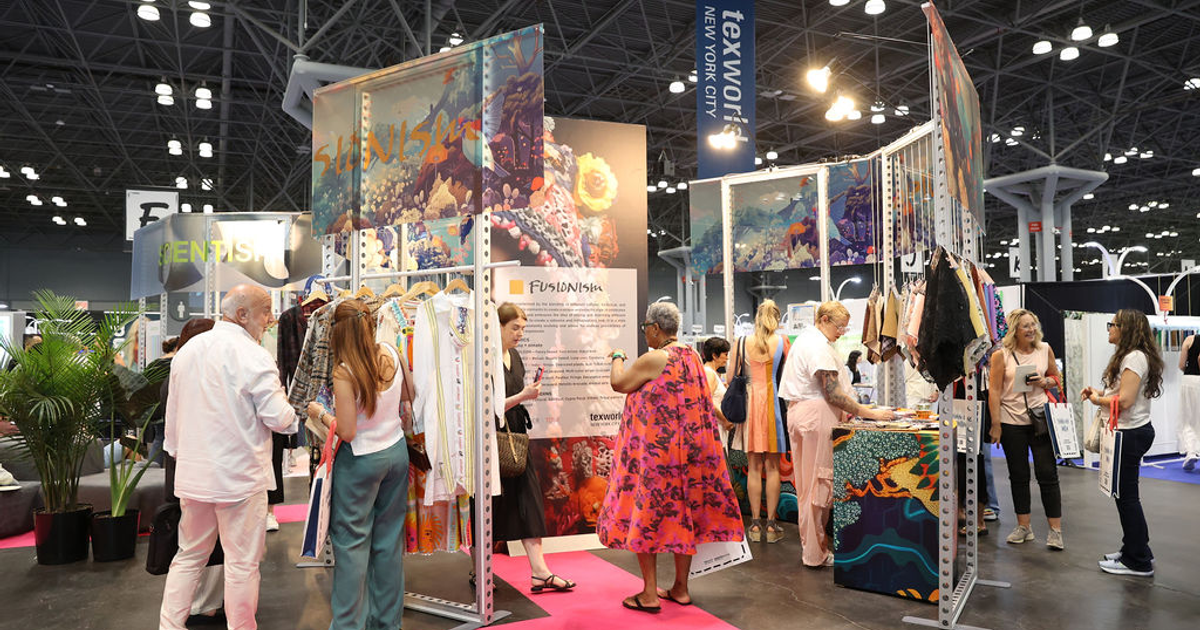
Texworld NYC closed its summer edition at the Jacob K. Javits Convention Center on 31 July after three days of sourcing meetings between fabric mills, garment makers and the American buyers who specify them. This was the show's 20th-anniversary edition, and by the count reported in trade coverage of the event it brought together more than 425 exhibitors from 20 countries.
Three shows ran under one roof: Texworld NYC for fabrics and trims, Apparel Sourcing NYC for finished garments and contract manufacturing, and Home Textiles Sourcing NYC for bedding, bath and decorative textiles. Together they are routinely described as the largest textile and apparel sourcing platform on the US East Coast.
For readers of this publication, the story is not the anniversary. It is what Pakistan did with the floor.
THE PAVILION
Six Pakistani companies exhibited at the July edition. Five of them — A1 Infinity, Homtex Corporation, MRI Group, Niza Sports and Ruqi Sports — stood together under a Pakistan Pavilion organised by the Trade Development Authority of Pakistan. The sixth, Mahmood Textile Mills, took its own space independently.
The mix covered textiles, fashion apparel, denim and home furnishings — which is to say it spanned all three co-located shows from a single national footprint.
Pakistan's ambassador to the United States, Rizwan Saeed Sheikh, visited the pavilion during the show, accompanied by the consul general in New York and the trade and investment counsellor, according to reporting on the Pakistani participation.
WHY A PAVILION BEATS A BOOTH
A single factory taking a 100-square-foot booth in a foreign hall is easy to walk past. A national pavilion is not. It concentrates traffic, it signals institutional backing, and — the part that matters commercially — it lets a buyer compare denim, home textiles and technical sportswear from one country in one aisle, which is how sourcing managers actually think about country risk and consolidated shipping.
It is also cheaper. For the July edition, TDAP offered participating companies a stand at a subsidised rate of PKR 1,537,500 against an actual direct stand cost of PKR 2,079,648, according to TDAP's participation notice as reported by The AZB — roughly a quarter off before a firm counts the shared build and logistics. Applications through TDAP closed at the end of May, two months before the show. For a mid-sized Sialkot or Faisalabad manufacturer weighing a first US show, the pavilion route is the difference between a possible trip and an impossible one.
Two of the five pavilion names — Niza Sports and Ruqi Sports — are sporting-goods houses. That is the Sialkot pattern in miniature: capacity built for one export category walking into an adjacent one, in this case apparel and textiles, through a door the state helped open.
THE HEADWINDS ON THE FLOOR
The mood in the aisles was not uniformly celebratory. Xinhua's report from the floor described exhibitors grappling with what it called unprecedented headwinds — tariff uncertainty chief among them — as suppliers and buyers tried to price orders without knowing what US duties would apply by delivery time.
That uncertainty is not an argument against attending. It is an argument for being in the room. Tariff exposure is now a line item in every sourcing conversation, and the suppliers who can speak to it directly — with landed-cost scenarios, alternative routings and honest lead times — are the ones who win the order when a buyer is forced to re-shore or re-country a programme. Those conversations do not happen over email.
VOICES FROM THE FLOOR
We spoke to two exhibitors picked at random from the aisles, one from each side of the sourcing map.
Sami Bashir, exhibiting with the Pakistan Pavilion, said the three days had been about proving a point as much as taking orders. "Buyers here already know China and they already know Bangladesh," he told us. "Our job on this floor is simpler than people think — show the fabric, quote the lead time, and let them do the arithmetic. Most of the people who stopped at our stand had never priced Pakistan before. That is the whole win."
A few aisles over, Xingyu of Zhejiang Garments described a different show to the one his company attended two years ago. "The questions have changed," he said. "Before, it was price per piece, minimum order, done. Now every second buyer asks where else we can produce, what happens to their landed cost if duties move again, whether we have capacity outside China. We answer honestly. Everyone at this show is doing the same maths."
Two exhibitors, one shared read: the buyers walking Javits this summer were not shopping for a quote. They were shopping for a supply chain that still works when the rules change — and that is a question a factory can only answer in person.
THE SOURCING READ
- Three shows, one badge. Texworld, Apparel Sourcing and Home Textiles Sourcing share the hall — one trip covers fabrics, finished garments and home textiles.
- The pavilion route works. Six Pakistani firms exhibited in July; five went through TDAP. If you want a US textile show on the calendar, TDAP's exhibition list is where to start, not the organiser's rate card.
- Tariff talk is the sales conversation now. Buyers at the July edition were pricing uncertainty. Suppliers who arrive with landed-cost answers convert.
- The next edition is 19–21 January 2027 at the Javits Center. Pavilion applications and booth sales run months ahead — the window for January is now.
MAKE THE TRIP
Texworld NYC returns to the Javits Center on 19–21 January 2027, again alongside Apparel Sourcing NYC and Home Textiles Sourcing NYC. Registration and exhibitor enquiries run through Messe Frankfurt's Texworld NYC site.
If January is the target, the work starts now: check whether TDAP is organising a pavilion for the winter edition, and if it is, get on the list early — national pavilion space is allocated, not bought. If it is not, the July 2026 exhibitor list is the reconnaissance document: pull it, mark the buyers' badges you want scanned, and price an independent booth against a shared one before the floor plan fills.